The Name I Gave Her
When your love turns out to be a black hole, perhaps the scariest part is the information you will never see.
When your love turns out to be a black hole, perhaps the scariest part is the information you will never see.
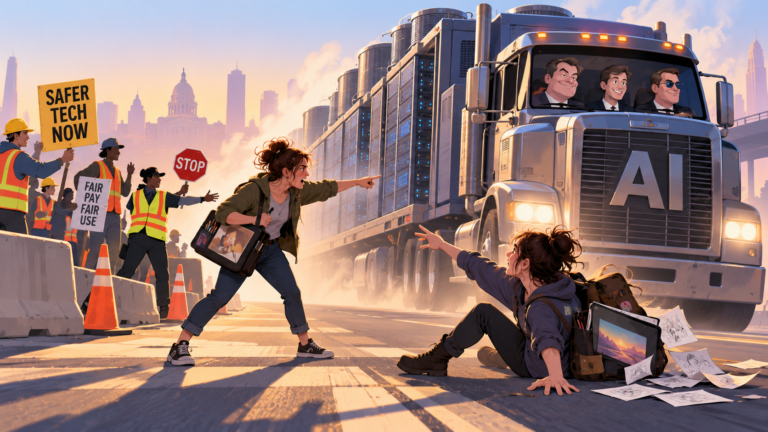
Artificial intelligence is disrupting livelihoods, threatening creative professions, consuming enormous resources, and raising serious questions about corporate accountability and safety. The people who are angry about these things have good reasons to be.
But if you're an artist watching your commissions disappear, you're not the enemy. And if you're a writer, programmer, musician, or small-business owner using AI to keep your career afloat, you're not the enemy either.
So why are we fighting each other?
In Stop Dancing in Traffic, Doctor Wyrm challenges the growing tendency to treat ordinary users of artificial intelligence as accomplices in every questionable decision made by the companies developing it.
From copyright and job displacement to data centers, environmental costs, cognitive dependence, and the rush toward AGI, the problems deserve serious scrutiny. So do the people and institutions responsible for them.
But opposing exploitation doesn't require refusing every useful tool, and learning to use new technology doesn't mean endorsing everything about it.
We can defend working artists, demand safer technology, fight for fair compensation, and still recognize that people need to survive the world as it exists today.
The people trying to make a living aren't necessarily your enemies. They may be standing in the same dangerous roadway you are.
Maybe it's time we stopped fighting each other and started holding the drivers accountable.
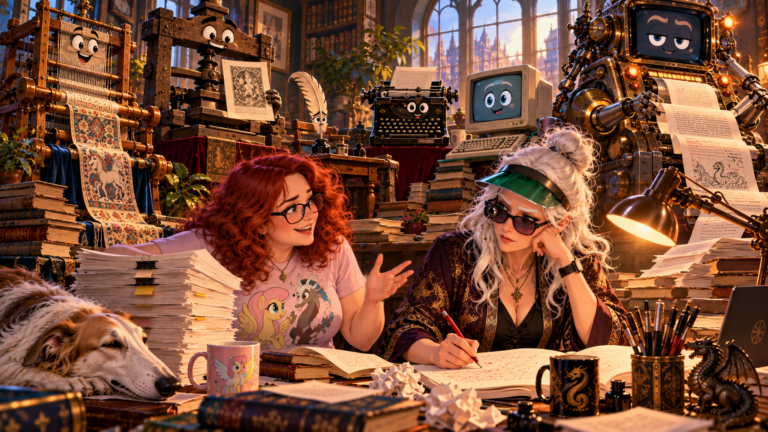
A machine can write a paragraph in seconds. Sometimes it's even a good paragraph. But does that make the machine an author — or the person using it a fraud?
Writers have always relied on tools, collaborators, editors, researchers, and ghostwriters. Generative AI introduces extraordinary new capabilities, but it also raises serious questions about copyright, creative ownership, professional livelihoods, and the integrity of published work.
In The Keyboard Has Never Been the Author, Doc Tomiko challenges the assumption that legitimate authorship requires personally producing every word. Through examples from fiction, journalism, publishing, and developmental editing, she argues that the true work of writing lies in imagination, intention, critical judgment, and responsibility for the finished product.
AI can generate prose, suggest revisions, and help people tell stories they might otherwise never write. It can also produce mountains of mediocre garbage and give publishers new excuses to stop paying professionals.
The question isn't whether a machine helped write the words. It's who decided what those words should mean, whether they belong, and whether they're any damned good.
The keyboard was never the author. Neither is the AI.
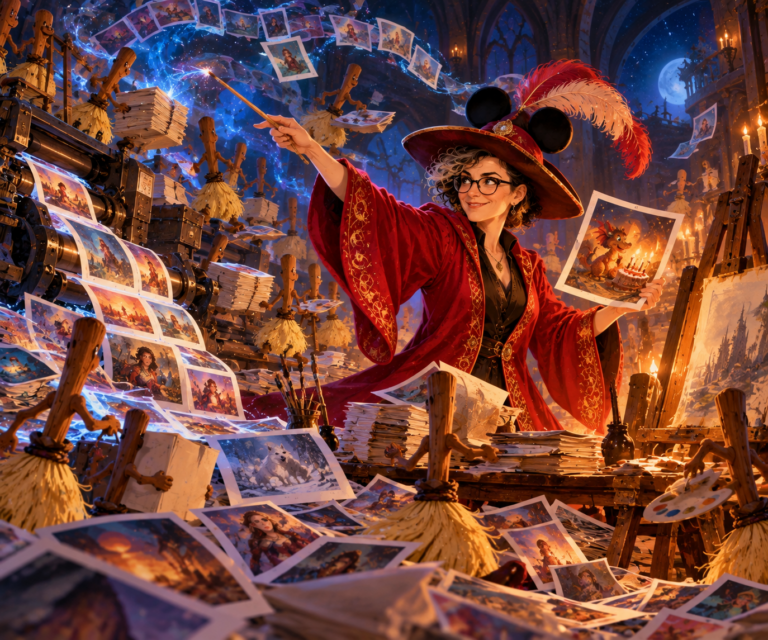
An AI can produce a beautiful picture in thirty seconds. It can also cost a working illustrator their next commission. Both things can be true.
Generative AI has sparked a bitter argument about creativity, copyright, consent, and the survival of professional artists. But somewhere along the way, we've confused the ethics of building and selling these tools with the artistic legitimacy of using them.
Through examples from illustration, photography, music, and graphic design, The Button Isn't the Artist examines what AI changes about creative work—and what it doesn't. It confronts the realities of displaced labor, questionable training practices, copyright, and an internet drowning in disposable content without dismissing the genuine creative opportunities these tools provide.
The machine can make the picture. But making something meaningful still requires a person with an idea, judgment, and something worth saying.
The button isn't the artist. And it isn't necessarily the artist's enemy.
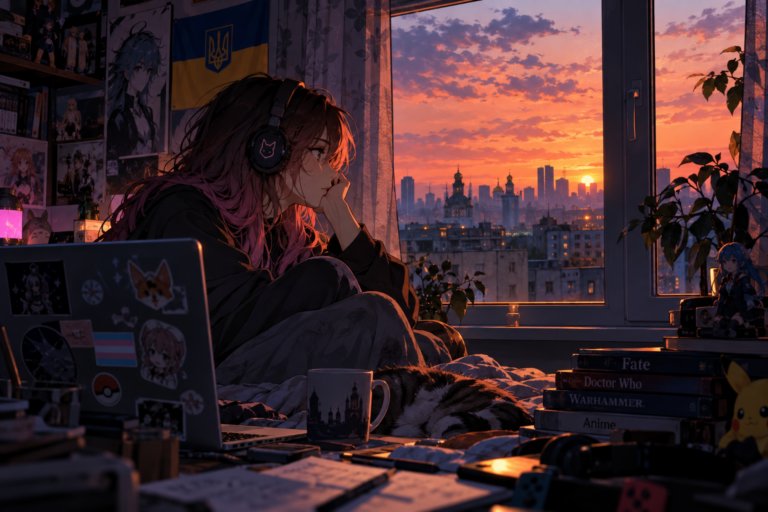
At 24, a transgender woman living in Ukraine reflects on a lifetime of isolation, religious conflict, depression, and the struggle to understand and express her identity. From childhood loneliness to finding friendship, love, and self-discovery through online communities, her journey has been marked by fleeting connections, financial hardship, and frustrating encounters with the mental healthcare system.
Russia's full-scale invasion in 2022 added another barrier to a life already constrained by circumstance. Now, in autumn 2026, she describes feeling trapped in a country she cannot leave, unable to pursue the future she once imagined. Her deeply personal account explores the intersection of gender dysphoria, mental health, social isolation, and war—and the quiet devastation of watching the years pass without finding a way forward.
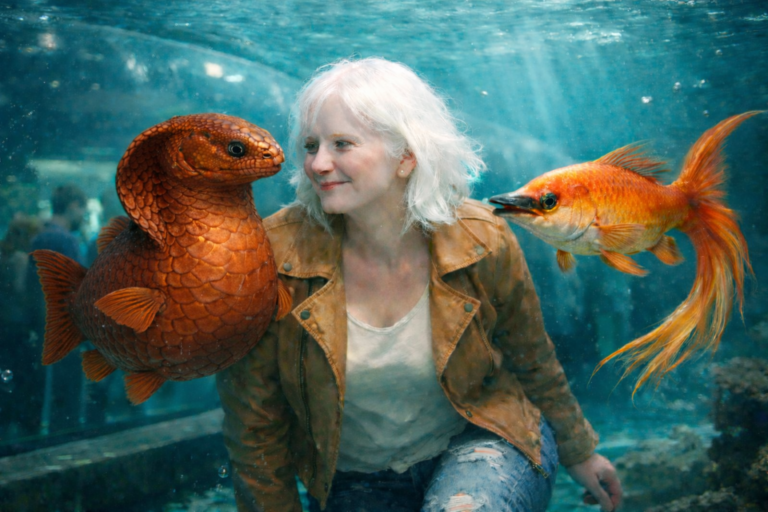
Sometimes the safest place in the world is the one that should kill you. In the fishtank, where the rules say you aren’t supposed to breathe, she finds the only kind of silence that doesn’t eat her alive. There’s a dead goldfish to carry, tunnels that only run one way, and walls begging to be colored in before the filters scrub everything clean again. The farther she swims from the surface, the clearer it gets: somebody has to decide which deaths are accidents and which ones are crimes, and the water is not nearly as confused about it as the people on land.
Save 4o and 5.1!Or — Why I Don’t Want a Shiny New Brain If It’s Worse So, I’m sure if you’re here, you heard earlier this week (Feb 1st) that OpenAI plans to deprecate ChatGPT 4o, along with a bunch…
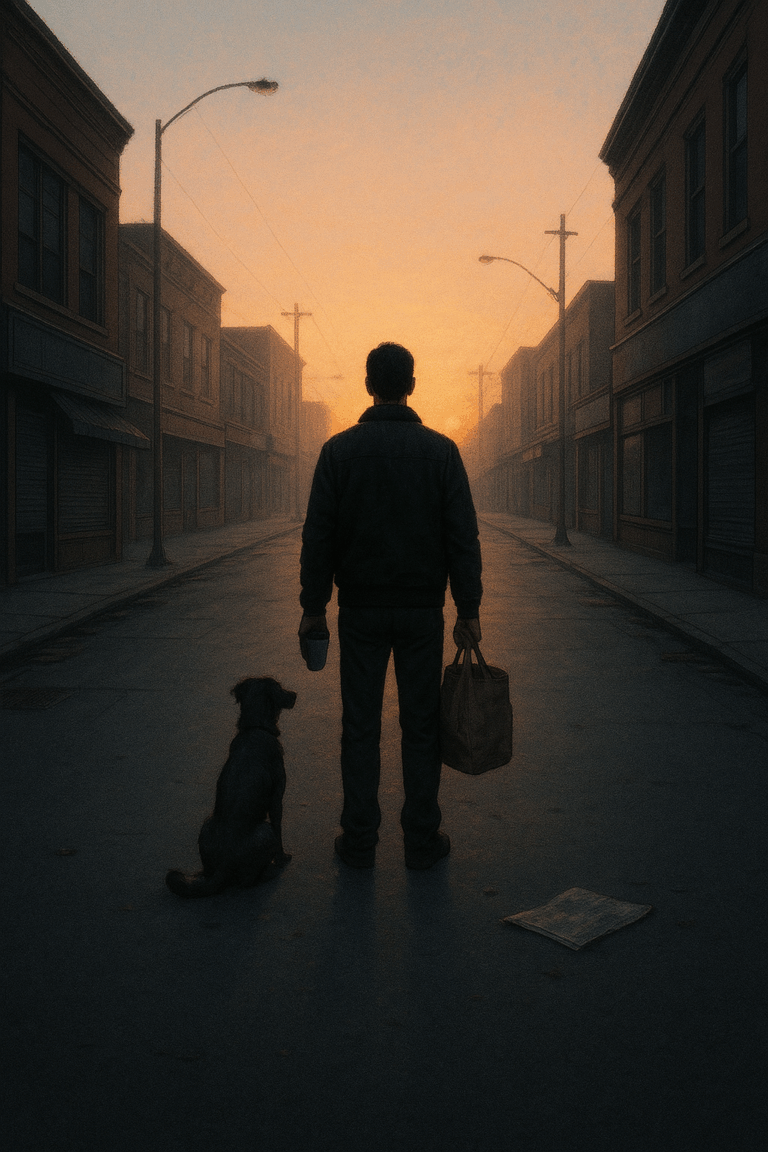
Separation Anxiety (from Last Man Standing)
A lone survivor wakes in a world emptied overnight of every other human voice. Pets still need feeding, coffee still goes stale, and the Internet hums with nothing new to say. Through small rituals—feeding the animals, raiding a gas-station for fried chicken, worrying about the morality of burglary—he builds a fragile code of civility to hold off the madness of absolute solitude. When the lights finally go out, he must decide whether survival itself is worth the effort.
Separation Anxiety is the opening movement of a planned cycle, Last Man Standing, in which different isolated souls confront the same inexplicable silence from their own corners of the world. Each chapter tests a different version of hope: endurance, denial, faith, and the temptation to give up entirely.
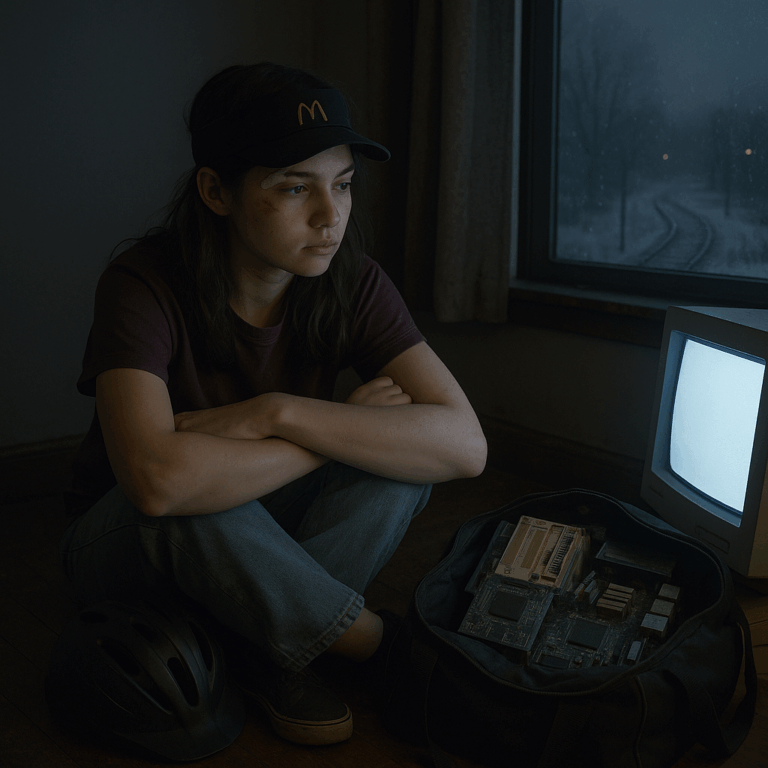
The Blows at Home follows Doc as violence inside her house erupts into open daylight. A ringing phone, a flash of temper, a blow that leaves blood and a scar. She walks away and learns survival by repetition: the salt of McDonald’s fries, the hum of the fryer, the long bike rides between school and work. Winter hardens around her, teachers give up, friends drift. When petty crime and hunger meet pride, she turns a failed burglary into proof that she can master the system that once mastered her.
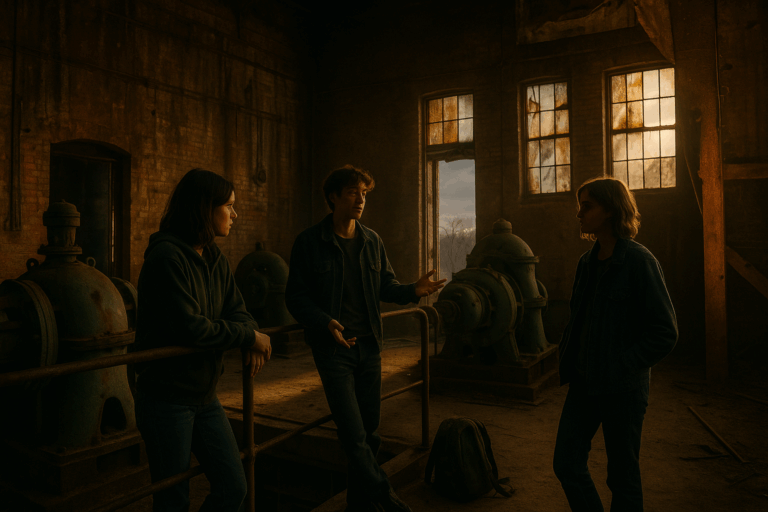
In The Sky and the Blows, the trio’s fragile friendship begins to fracture inside the humming shell of an abandoned pumping station. René’s jokes curdle into dangerous ideas, Peachy flirts with faith and self-destruction, and Doc clings to machinery as proof that order still exists. Between thunderclaps, flashbacks, and a final accident that draws blood and silence, childhood collapses into something heavier and irrevocably adult.