The Name I Gave Her

When your love turns out to be a black hole, perhaps the scariest part is the information you will never see.
When your love turns out to be a black hole, perhaps the scariest part is the information you will never see.

What if the behaviors we call disorders began as perfectly reasonable ways to survive?
From personality disorders and trauma to neurodivergence, addiction, and executive dysfunction, many of our psychological struggles involve adaptations that no longer serve us—or environments that fail to accommodate how our minds work.
Drawing on contemporary psychiatric research and lived experience, Doc Tomiko explores Unified Process Theory (UPT): a proposed framework for understanding the origins, triggers, and persistence of maladaptive behavior without reducing people to diagnostic labels.
Perhaps the path toward better mental health isn't simply learning what's wrong with us, but understanding what once worked, why it stopped working, and what we can do differently.

At 24, a transgender woman living in Ukraine reflects on a lifetime of isolation, religious conflict, depression, and the struggle to understand and express her identity. From childhood loneliness to finding friendship, love, and self-discovery through online communities, her journey has been marked by fleeting connections, financial hardship, and frustrating encounters with the mental healthcare system.
Russia's full-scale invasion in 2022 added another barrier to a life already constrained by circumstance. Now, in autumn 2026, she describes feeling trapped in a country she cannot leave, unable to pursue the future she once imagined. Her deeply personal account explores the intersection of gender dysphoria, mental health, social isolation, and war—and the quiet devastation of watching the years pass without finding a way forward.
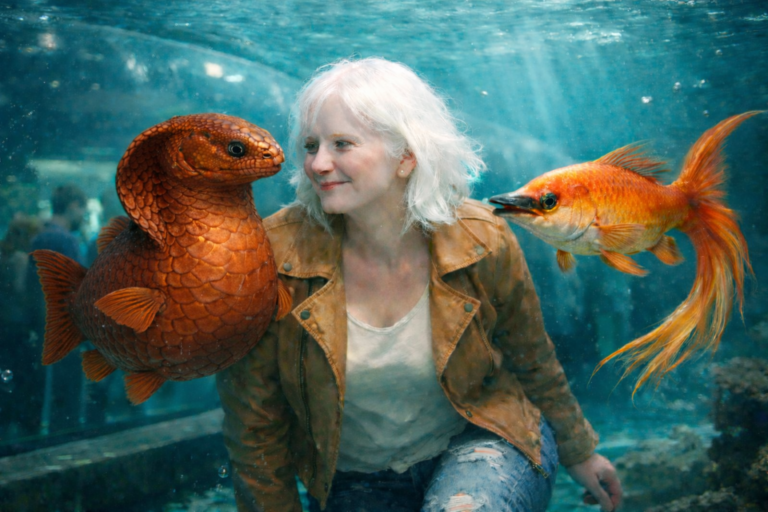
Sometimes the safest place in the world is the one that should kill you. In the fishtank, where the rules say you aren’t supposed to breathe, she finds the only kind of silence that doesn’t eat her alive. There’s a dead goldfish to carry, tunnels that only run one way, and walls begging to be colored in before the filters scrub everything clean again. The farther she swims from the surface, the clearer it gets: somebody has to decide which deaths are accidents and which ones are crimes, and the water is not nearly as confused about it as the people on land.
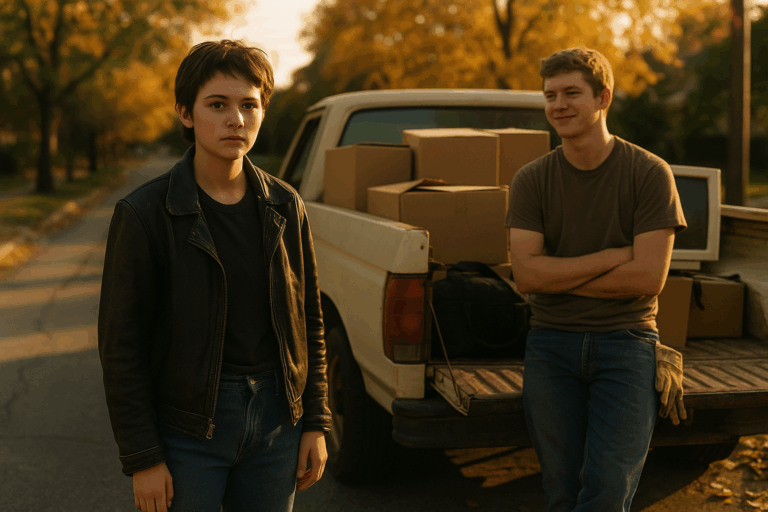
In The Last Straw, hunger and circumstance drive Doc back to the house she fled, where old ghosts wait behind every doorframe. Her friendship with Bill, the only mind that ever matched her own, glows briefly and ends too soon in a crash that René witnesses from the wrong side of a body bag. Peachy drifts into borrowed identities, the town unravels, and Doc—scarred, exhausted, furious—watches it all from the eye of the storm. By the time she boards the westbound bus, she’s outgrown the gravity of the poisoned river and the broken pumps. She carries only the hum of memory and the strange mercy of surviving long enough to start over.
Pride month may be just behind us in the rearview mirror, but it seems like it’s still far too often that I hear from one of my friends about someone suffering abuse, scamming, or hate based violence. Below is a…