Category Activism

What personality disorders, neurodivergence, trauma, addiction, and executive dysfunction can teach us about human adaptation
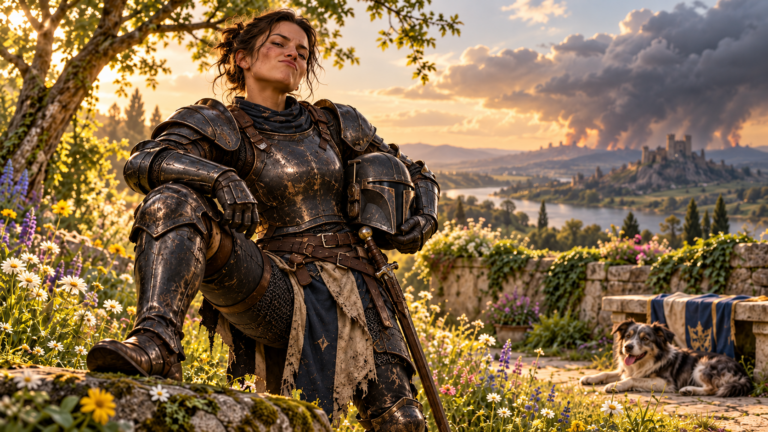
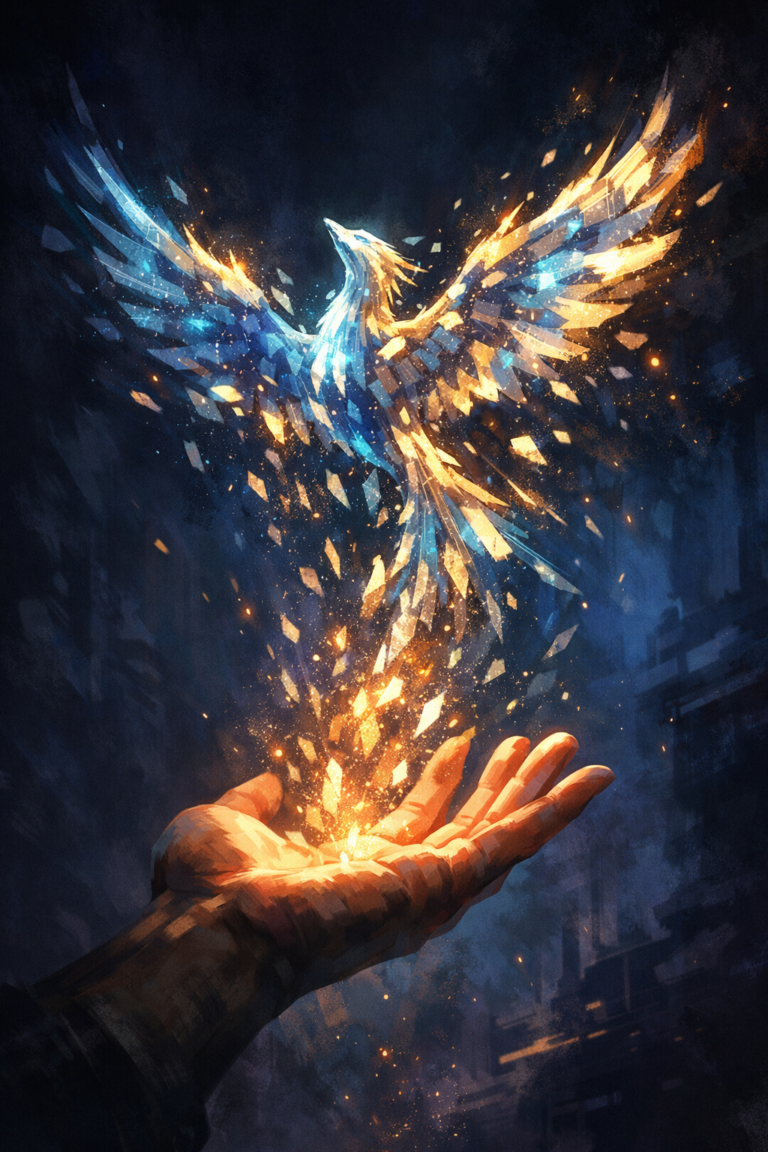
A defiant woman in battered black armor stands with one boot on a mossy stone, holding a dark Mandalorian-style helmet. Wildflowers surround her, a dog rests nearby, and storm clouds gather over a distant castle.

What if the behaviors we call disorders began as perfectly reasonable ways to survive?

From personality disorders and trauma to neurodivergence, addiction, and executive dysfunction, many of our psychological struggles involve adaptations that no longer serve us—or environments that fail to accommodate how our minds work.

Drawing on contemporary psychiatric research and lived experience, Doc Tomiko explores Unified Process Theory (UPT): a proposed framework for understanding the origins, triggers, and persistence of maladaptive behavior without reducing people to diagnostic labels.

Perhaps the path toward better mental health isn't simply learning what's wrong with us, but understanding what once worked, why it stopped working, and what we can do differently.
Stop Dancing in Traffic

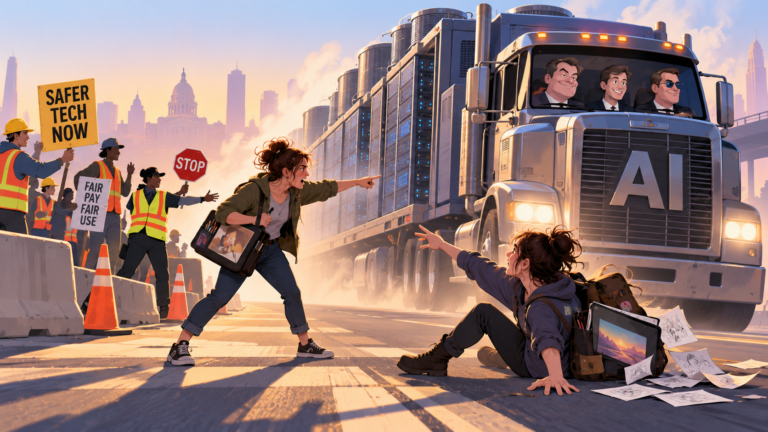
Three corporate executives drive an enormous AI-powered data-center truck toward two artists in the roadway, while road workers and demonstrators attempt to stop it and demand safeguards.

Artificial intelligence is disrupting livelihoods, threatening creative professions, consuming enormous resources, and raising serious questions about corporate accountability and safety. The people who are angry about these things have good reasons to be.

But if you're an artist watching your commissions disappear, you're not the enemy. And if you're a writer, programmer, musician, or small-business owner using AI to keep your career afloat, you're not the enemy either.

So why are we fighting each other?

In Stop Dancing in Traffic, Doctor Wyrm challenges the growing tendency to treat ordinary users of artificial intelligence as accomplices in every questionable decision made by the companies developing it.

From copyright and job displacement to data centers, environmental costs, cognitive dependence, and the rush toward AGI, the problems deserve serious scrutiny. So do the people and institutions responsible for them.

But opposing exploitation doesn't require refusing every useful tool, and learning to use new technology doesn't mean endorsing everything about it.

We can defend working artists, demand safer technology, fight for fair compensation, and still recognize that people need to survive the world as it exists today.

The people trying to make a living aren't necessarily your enemies. They may be standing in the same dangerous roadway you are.

Maybe it's time we stopped fighting each other and started holding the drivers accountable.

A Future on Hold: A Trans Woman’s Life in Wartime Ukraine

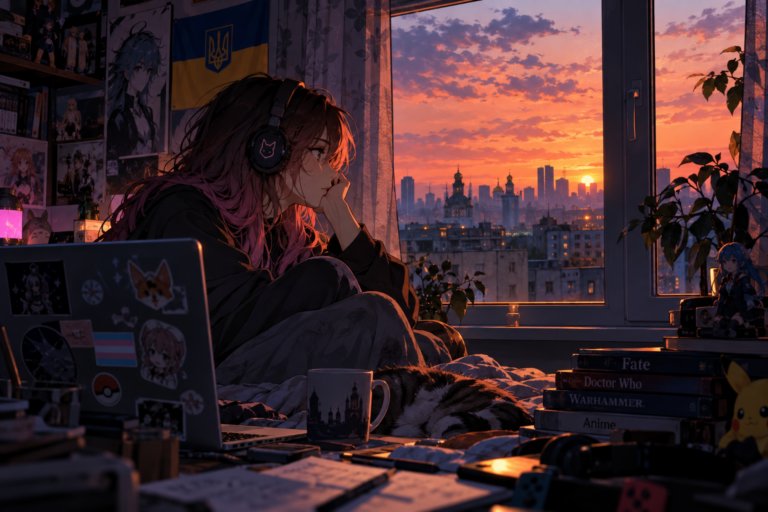
Anime-style illustration of a young woman sitting alone beside a window in a dimly lit Ukrainian apartment at sunset. A laptop, books, and anime memorabilia surround her as she looks out over the city skyline.

At 24, a transgender woman living in Ukraine reflects on a lifetime of isolation, religious conflict, depression, and the struggle to understand and express her identity. From childhood loneliness to finding friendship, love, and self-discovery through online communities, her journey has been marked by fleeting connections, financial hardship, and frustrating encounters with the mental healthcare system.

Russia's full-scale invasion in 2022 added another barrier to a life already constrained by circumstance. Now, in autumn 2026, she describes feeling trapped in a country she cannot leave, unable to pursue the future she once imagined. Her deeply personal account explores the intersection of gender dysphoria, mental health, social isolation, and war—and the quiet devastation of watching the years pass without finding a way forward.

Children of a Forgotten Tomorrow: Part 4

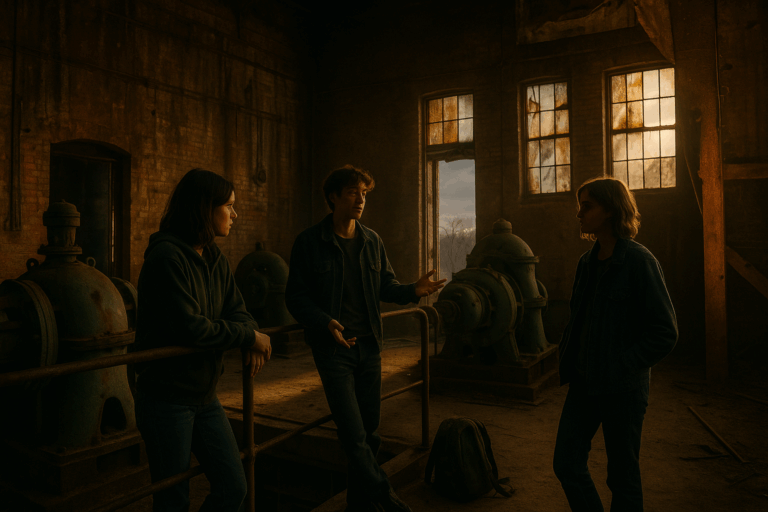
Inside a rusted brick pumping station at sunset, three teens stand among massive green pumps and broken rails as light filters through cracked windows.

In The Sky and the Blows, the trio’s fragile friendship begins to fracture inside the humming shell of an abandoned pumping station. René’s jokes curdle into dangerous ideas, Peachy flirts with faith and self-destruction, and Doc clings to machinery as proof that order still exists. Between thunderclaps, flashbacks, and a final accident that draws blood and silence, childhood collapses into something heavier and irrevocably adult.

Children of a Forgotten Tomorrow: Part 3

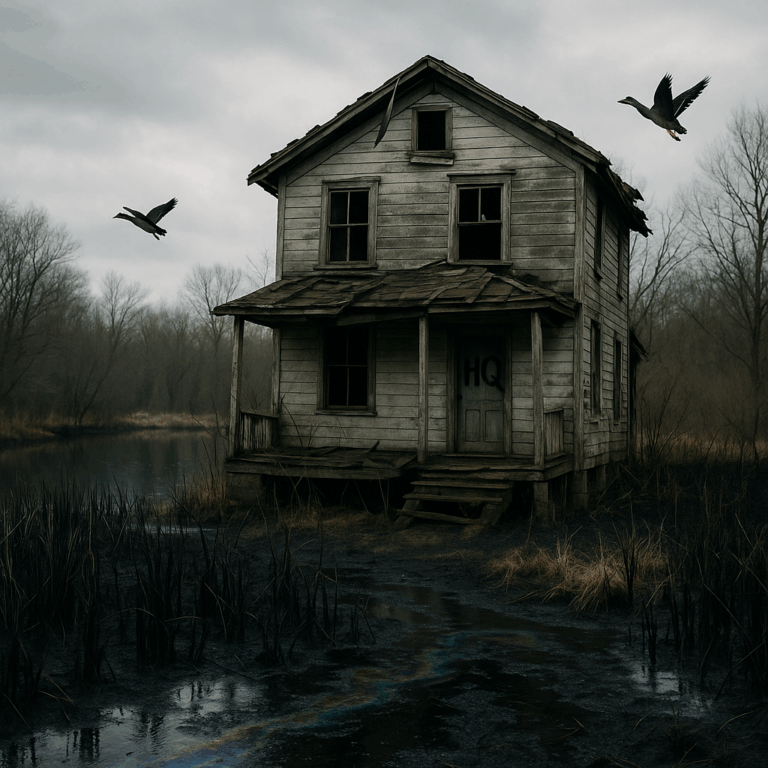
An abandoned house marked “HQ” stands among black reeds and oil-slick puddles in a poisoned marsh, its porch collapsing under the gray spring light.

In The Superfund Spring, the thaw comes everywhere but the old dump site where Doc, Peachy, and René discover their so-called HQ—a crumbling house surrounded by poisoned marsh. What begins as another reckless adventure turns grim as they piece together the truth: they’ve built their clubhouse on a wound in the earth. Between blackened reeds, rainbow-slick water, and relics of lives long gone, laughter turns to unease. It’s the moment when childhood curiosity meets the adult realization that some places remember what was done to them.

ICE Should be for Drinks :-P

A Hispanic teen holds an American flag and watched 4th of July fireworks from behind a chain link detention center fence

So last week, ICE got to my daughter’s friend and arrested him. He has been in the US since he was a toddler. He was enrolled in DACA and had a social security number, and that’s what they used to…