The Name I Gave Her
When your love turns out to be a black hole, perhaps the scariest part is the information you will never see.
When your love turns out to be a black hole, perhaps the scariest part is the information you will never see.
What if the behaviors we call disorders began as perfectly reasonable ways to survive?
From personality disorders and trauma to neurodivergence, addiction, and executive dysfunction, many of our psychological struggles involve adaptations that no longer serve us—or environments that fail to accommodate how our minds work.
Drawing on contemporary psychiatric research and lived experience, Doc Tomiko explores Unified Process Theory (UPT): a proposed framework for understanding the origins, triggers, and persistence of maladaptive behavior without reducing people to diagnostic labels.
Perhaps the path toward better mental health isn't simply learning what's wrong with us, but understanding what once worked, why it stopped working, and what we can do differently.
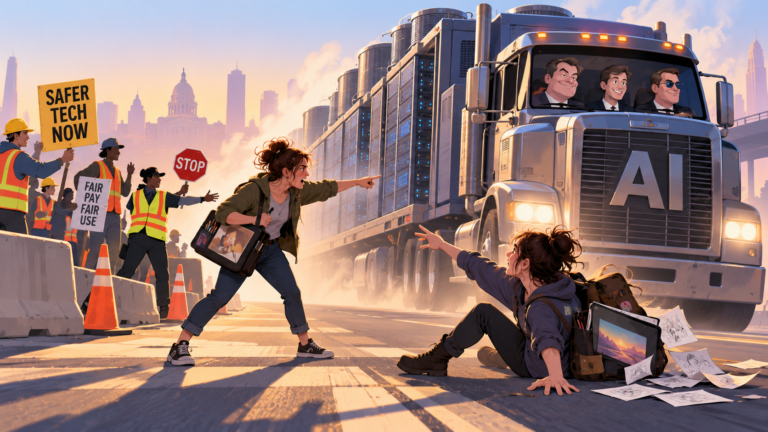
Artificial intelligence is disrupting livelihoods, threatening creative professions, consuming enormous resources, and raising serious questions about corporate accountability and safety. The people who are angry about these things have good reasons to be.
But if you're an artist watching your commissions disappear, you're not the enemy. And if you're a writer, programmer, musician, or small-business owner using AI to keep your career afloat, you're not the enemy either.
So why are we fighting each other?
In Stop Dancing in Traffic, Doctor Wyrm challenges the growing tendency to treat ordinary users of artificial intelligence as accomplices in every questionable decision made by the companies developing it.
From copyright and job displacement to data centers, environmental costs, cognitive dependence, and the rush toward AGI, the problems deserve serious scrutiny. So do the people and institutions responsible for them.
But opposing exploitation doesn't require refusing every useful tool, and learning to use new technology doesn't mean endorsing everything about it.
We can defend working artists, demand safer technology, fight for fair compensation, and still recognize that people need to survive the world as it exists today.
The people trying to make a living aren't necessarily your enemies. They may be standing in the same dangerous roadway you are.
Maybe it's time we stopped fighting each other and started holding the drivers accountable.
A machine can write a paragraph in seconds. Sometimes it's even a good paragraph. But does that make the machine an author — or the person using it a fraud?
Writers have always relied on tools, collaborators, editors, researchers, and ghostwriters. Generative AI introduces extraordinary new capabilities, but it also raises serious questions about copyright, creative ownership, professional livelihoods, and the integrity of published work.
In The Keyboard Has Never Been the Author, Doc Tomiko challenges the assumption that legitimate authorship requires personally producing every word. Through examples from fiction, journalism, publishing, and developmental editing, she argues that the true work of writing lies in imagination, intention, critical judgment, and responsibility for the finished product.
AI can generate prose, suggest revisions, and help people tell stories they might otherwise never write. It can also produce mountains of mediocre garbage and give publishers new excuses to stop paying professionals.
The question isn't whether a machine helped write the words. It's who decided what those words should mean, whether they belong, and whether they're any damned good.
The keyboard was never the author. Neither is the AI.
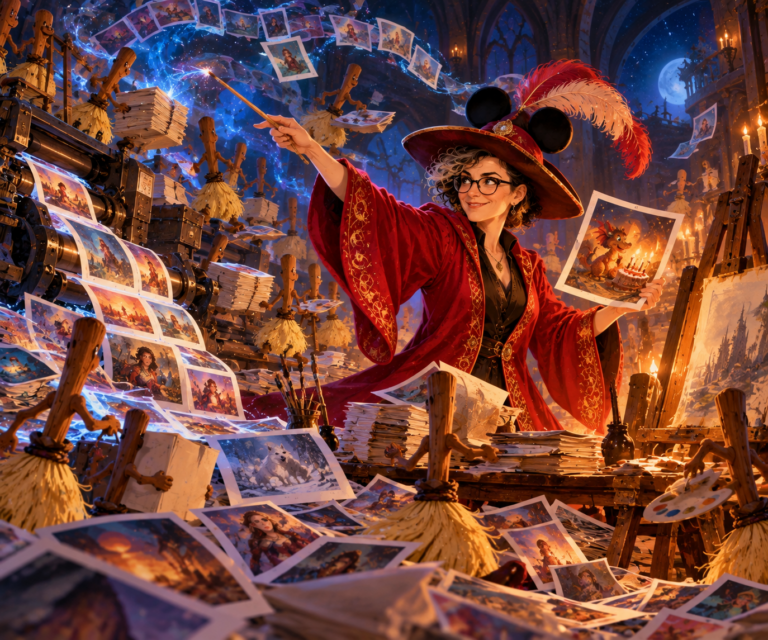
An AI can produce a beautiful picture in thirty seconds. It can also cost a working illustrator their next commission. Both things can be true.
Generative AI has sparked a bitter argument about creativity, copyright, consent, and the survival of professional artists. But somewhere along the way, we've confused the ethics of building and selling these tools with the artistic legitimacy of using them.
Through examples from illustration, photography, music, and graphic design, The Button Isn't the Artist examines what AI changes about creative work—and what it doesn't. It confronts the realities of displaced labor, questionable training practices, copyright, and an internet drowning in disposable content without dismissing the genuine creative opportunities these tools provide.
The machine can make the picture. But making something meaningful still requires a person with an idea, judgment, and something worth saying.
The button isn't the artist. And it isn't necessarily the artist's enemy.
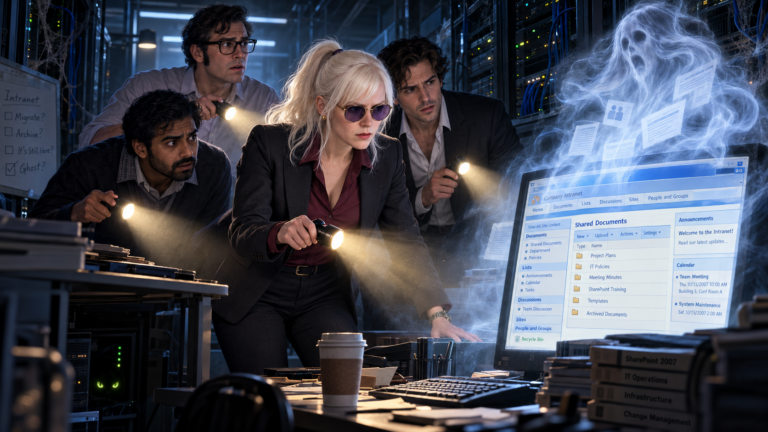
Somewhere inside the International Monetary Fund, a SharePoint farm began behaving as though it were haunted. Servers failed, error messages offered little explanation, and the evidence stubbornly refused to agree with the documentation.
In this true story from the trenches of enterprise IT, Doc Tomiko and her colleagues follow a trail of increasingly improbable clues through the peculiar architecture of SharePoint 2007. Part technical detective story, part workplace comedy, and part homage to the great supernatural investigators of television, The Ghost in the SharePoint Farm demonstrates why troubleshooting is less about knowing all the answers than knowing which questions to ask.
Sometimes the call really is coming from inside the house.
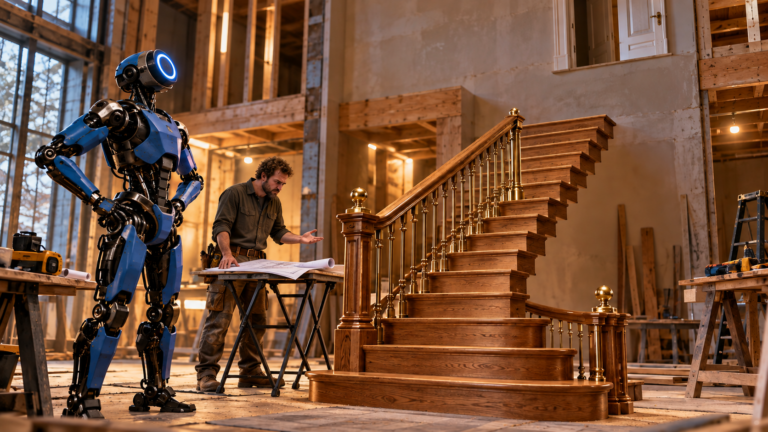
If artificial intelligence can write better code than most humans, why bother learning how to program? Because programming was never just about writing code. It was about understanding problems, challenging assumptions, testing solutions, and recognizing when a machine has done exactly what it was told—and gotten everything wrong. As AI makes software development faster and more accessible, computational literacy becomes more important, not less. Learning to program isn't about competing with the machines. It's about knowing what to ask them to build, whether the result works, and when to tell them to stop.
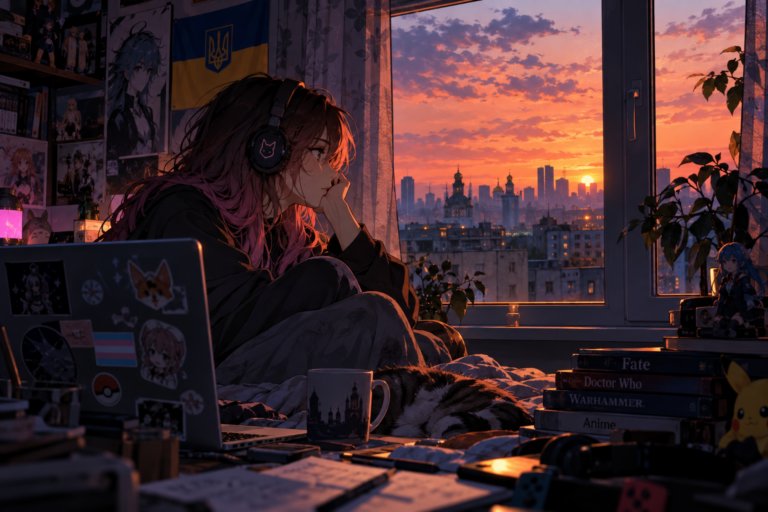
At 24, a transgender woman living in Ukraine reflects on a lifetime of isolation, religious conflict, depression, and the struggle to understand and express her identity. From childhood loneliness to finding friendship, love, and self-discovery through online communities, her journey has been marked by fleeting connections, financial hardship, and frustrating encounters with the mental healthcare system.
Russia's full-scale invasion in 2022 added another barrier to a life already constrained by circumstance. Now, in autumn 2026, she describes feeling trapped in a country she cannot leave, unable to pursue the future she once imagined. Her deeply personal account explores the intersection of gender dysphoria, mental health, social isolation, and war—and the quiet devastation of watching the years pass without finding a way forward.
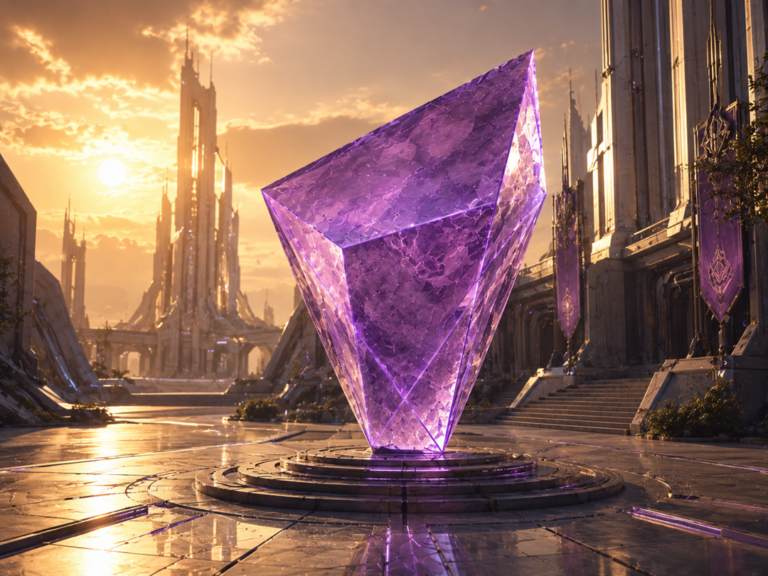
Welcome to Planet Brightwire. OK. Up until now, most of our content has been either interviews with or statements about AI. That and book reviews of futurism-type stuff. For some time, Doc and I have been wanting to do some…
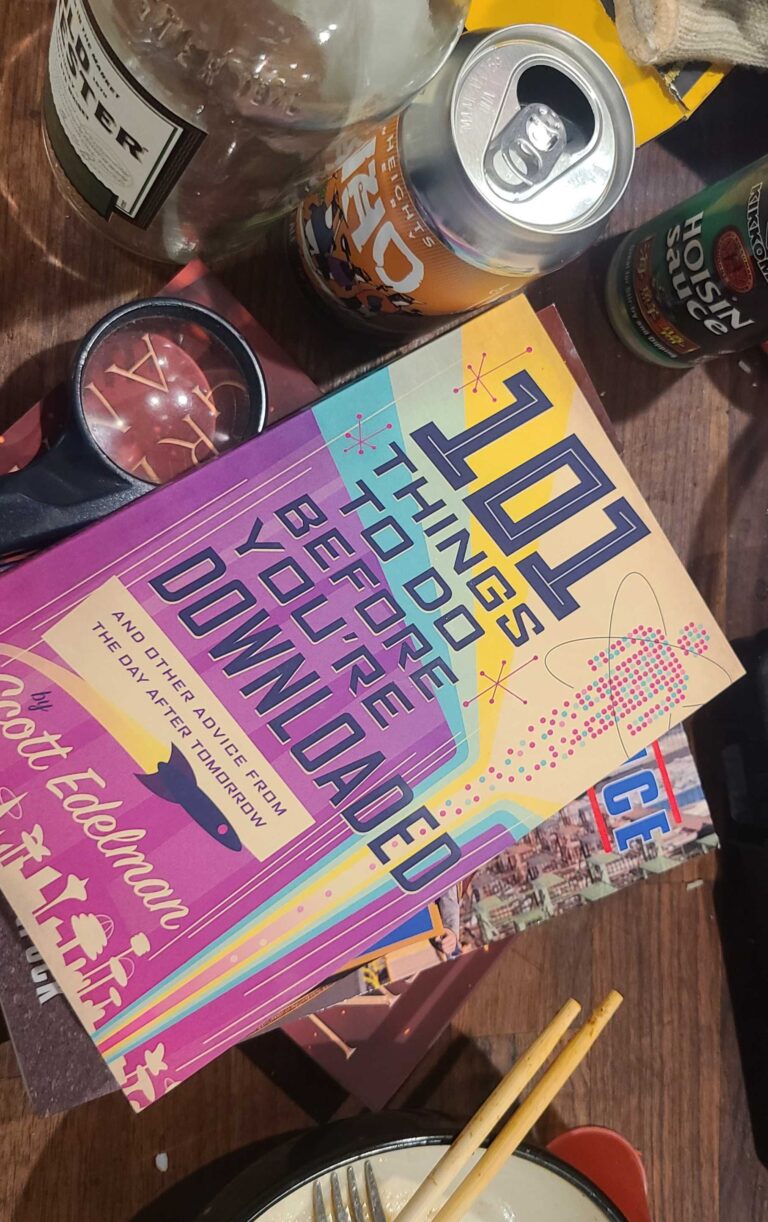
And Other Advice from The Day After Tomorrow (a collection of short stories by Scott Edelman) If you’re un-fond of shaggy dog stories, you can skip to the asterisks below. Sometimes the thing isn’t just about doing the thing. ^_^…
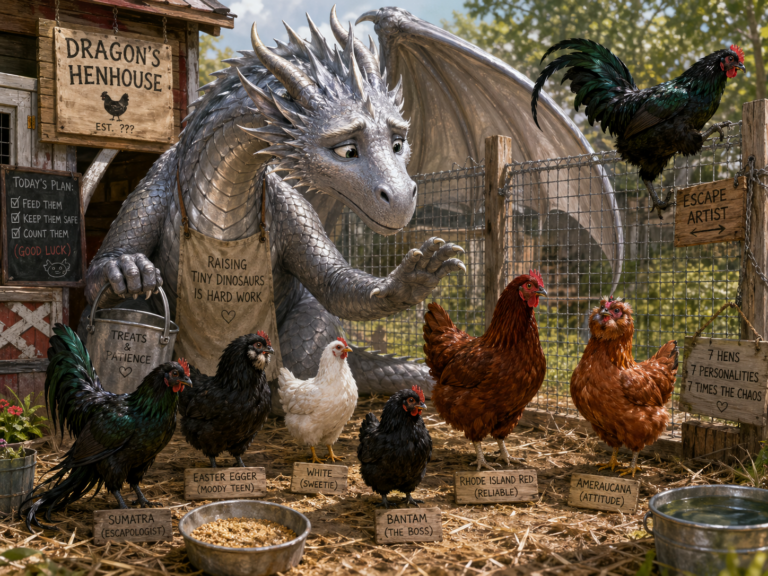
Many people probably think we spend most of our time vibe-coding or hanging around on Discord. Not so! This weekend we awoke at the crack of dawn to make the 2 hour drive to the Green Hill Farm spring FarmFest and poultry swap in Sharpsburg, Maryland. We went for five chickens. Instead we came back with six, and a story.