Category AI Legal

The Keyboard Has Never Been the Author
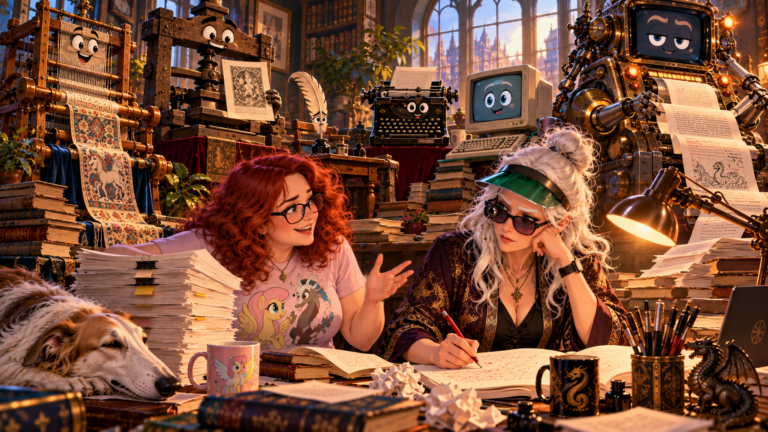
Auburn-haired author Alara debates her enormous manuscript with white-haired editor Tomiko, wearing sunglasses, a green editor's visor, and holding a red pencil. Behind them, a personified printing press, silk loom, typewriter, computer, and retro-futuristic AI robot compete for attention.

A machine can write a paragraph in seconds. Sometimes it's even a good paragraph. But does that make the machine an author — or the person using it a fraud?

Writers have always relied on tools, collaborators, editors, researchers, and ghostwriters. Generative AI introduces extraordinary new capabilities, but it also raises serious questions about copyright, creative ownership, professional livelihoods, and the integrity of published work.

In The Keyboard Has Never Been the Author, Doc Tomiko challenges the assumption that legitimate authorship requires personally producing every word. Through examples from fiction, journalism, publishing, and developmental editing, she argues that the true work of writing lies in imagination, intention, critical judgment, and responsibility for the finished product.

AI can generate prose, suggest revisions, and help people tell stories they might otherwise never write. It can also produce mountains of mediocre garbage and give publishers new excuses to stop paying professionals.

The question isn't whether a machine helped write the words. It's who decided what those words should mean, whether they belong, and whether they're any damned good.

The keyboard was never the author. Neither is the AI.
The Button Isn’t the Artist

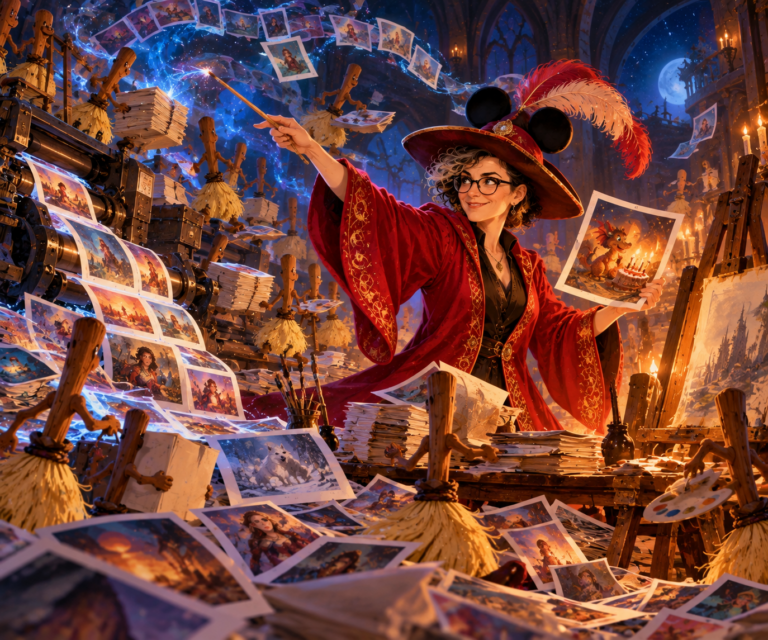
A bespectacled sorceress in red robes and a feathered, mouse-eared tricorne hat directs magical broomsticks producing mountains of AI-generated artwork in a fantastical studio.

An AI can produce a beautiful picture in thirty seconds. It can also cost a working illustrator their next commission. Both things can be true.

Generative AI has sparked a bitter argument about creativity, copyright, consent, and the survival of professional artists. But somewhere along the way, we've confused the ethics of building and selling these tools with the artistic legitimacy of using them.

Through examples from illustration, photography, music, and graphic design, The Button Isn't the Artist examines what AI changes about creative work—and what it doesn't. It confronts the realities of displaced labor, questionable training practices, copyright, and an internet drowning in disposable content without dismissing the genuine creative opportunities these tools provide.

The machine can make the picture. But making something meaningful still requires a person with an idea, judgment, and something worth saying.

The button isn't the artist. And it isn't necessarily the artist's enemy.